
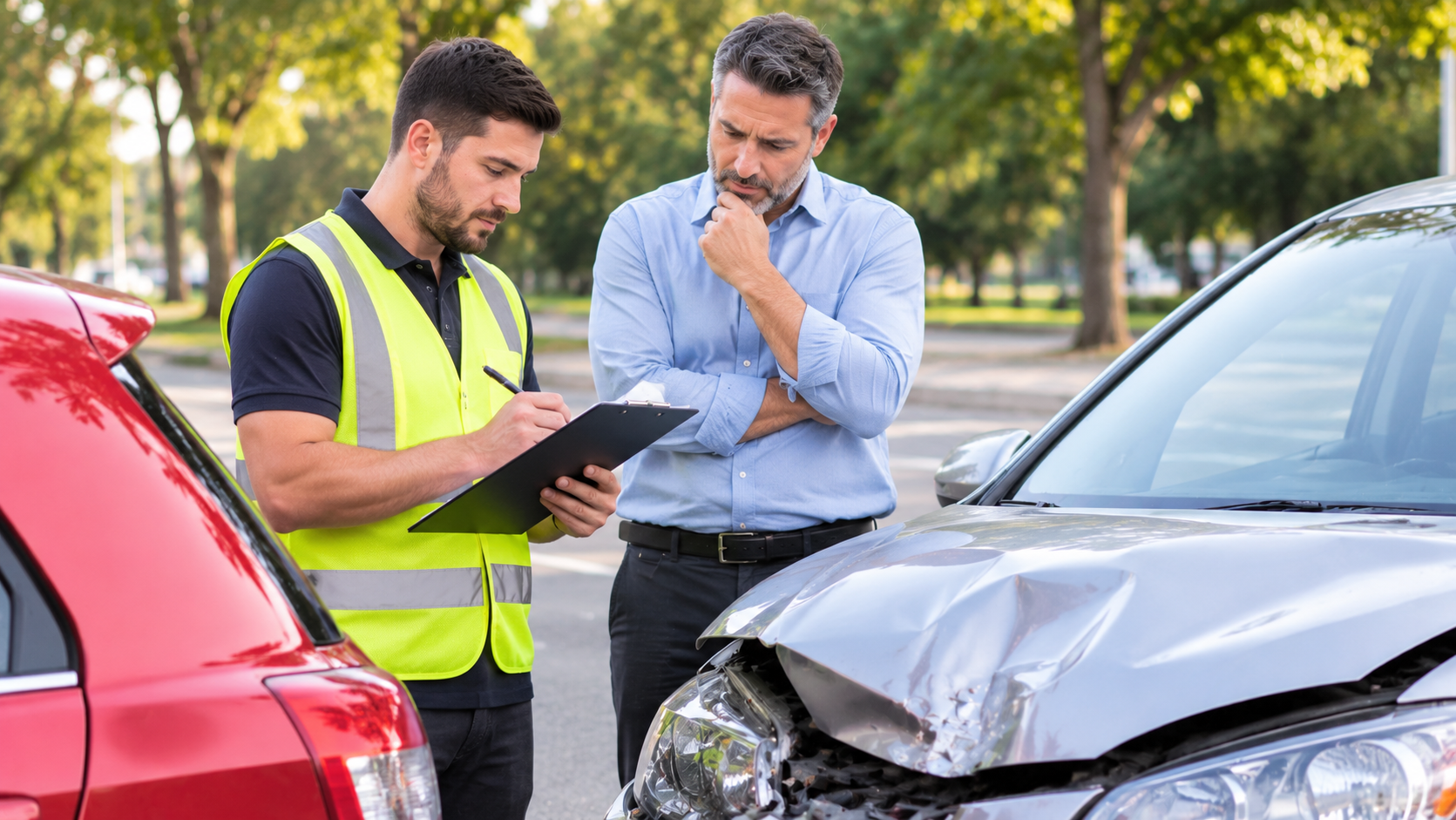
A car accident can happen unexpectedly, leaving you unsure about what to do next. Whether it is a minor collision in a car park or a more serious road accident, knowing what to do after a car accident can help protect your safety, meet your legal responsibilities and make the vehicle repair and insurance process easier.
In Australia, drivers involved in a collision must follow certain responsibilities, including stopping at the scene, assisting injured people and exchanging relevant details. Depending on the circumstances and the state or territory where the accident occurs, you may also need to report the incident to the police.
This guide explains the important steps to take after a car accident in Australia, from securing the accident scene and documenting vehicle damage to contacting your insurer and arranging professional smash repairs.
1. Stop Your Vehicle and Check for Injuries
The first thing to do after a car accident is stop your vehicle safely. Leaving the accident scene without fulfilling your responsibilities can result in serious legal consequences.
Once you have stopped:
- Turn on your hazard lights to warn approaching motorists.
- Switch off the engine if it is safe to do so.
- Check yourself, your passengers and other people involved for injuries.
- Assess whether there are immediate hazards, such as leaking fuel, smoke, fire or damaged electrical equipment.
- Avoid standing in areas where moving traffic could put you at risk.
If anyone is seriously injured, trapped or in immediate danger, call Triple Zero (000) for emergency assistance.
Do not move an injured person unless they are in immediate danger or need to be moved to provide essential assistance. Wait for emergency services and follow their instructions.
Even if the collision appears minor, remember that some injuries may not be immediately noticeable. Seek medical attention if you experience pain, dizziness, headaches or other concerning symptoms after the accident.
2. Move to a Safe Location if Possible
After checking for injuries, consider whether the vehicles need to be moved to reduce the risk of another collision.
If nobody is seriously injured and the vehicles can be moved safely, move them away from moving traffic to a nearby safe location.
However, if the vehicles are severely damaged, there is a risk of fire or moving them could create additional danger, leave them where they are and seek emergency assistance.
Before leaving the scene, make sure you have collected the necessary information and photographs, provided it is safe to do so.
If your vehicle is not roadworthy, do not attempt to drive it. Arrange suitable towing assistance through your insurer or a reputable towing provider.
3. Exchange Details with the Other Driver
One of the most important steps after a car accident is exchanging information with everyone involved.
Australian road rules generally require drivers involved in an accident to stop and provide relevant details to other parties. Requirements may vary depending on the state or territory.
Collect the following information from the other driver:
- Full name and residential address.
- Contact phone number.
- Driver’s licence details, where appropriate.
- Vehicle registration number.
- Vehicle owner’s name and contact details, if different from the driver.
- Insurance company details, if available.
- Vehicle make, model and colour.
You should also provide the required information about yourself and your vehicle.
Keep the conversation polite and factual. Avoid arguments about who caused the accident or admitting liability at the scene. Responsibility can be assessed later using the available evidence and relevant insurance processes.
If the other driver refuses to provide their details or leaves the scene, record their vehicle registration number and contact the police.
4. Take Photos and Collect Evidence
Photographic evidence can be extremely useful when reporting an accident to your insurance company and arranging vehicle repairs.
If it is safe to do so, use your mobile phone to document the accident scene before vehicles are moved.
Try to capture:
- Front, rear and side views of all vehicles involved.
- Close-up photographs of damaged panels, bumpers, doors and other affected areas.
- The overall accident scene and surrounding road conditions.
- Traffic signs, road markings and nearby intersections.
- Vehicle registration plates.
- Any damage to surrounding property.
- Relevant debris or skid marks, where safe to photograph.
You should also record the date, time and exact location of the accident.
If there are witnesses, ask for their names and contact details. Their observations may help clarify what happened if there is a disagreement about the circumstances.
Keep any available dashcam footage, as it may provide additional information about the collision.
The more accurate information you collect, the easier it may be to support your insurance claim and explain the extent of the damage.
5. Report the Accident to the Police if Required
Not every minor car accident requires police attendance. However, certain circumstances make reporting the incident necessary.
You should contact the police when:
- Someone has been injured or killed.
- A driver involved in the accident fails to stop or exchange details.
- There is suspected involvement of alcohol or drugs.
- A vehicle creates a serious traffic hazard.
- Police attendance is required under the applicable state or territory rules.
Reporting requirements can differ across Australia.
For example, Victoria requires drivers to report certain accidents involving injury or property damage when the relevant owner or police are not present. In NSW, accidents involving injury, a driver failing to exchange details or other specified circumstances must be reported.
If you are unsure whether your accident needs to be reported, contact your local police service for guidance.
If police attend, ask for the relevant incident or reference number and keep it with your accident records.
6. Contact Your Car Insurance Company
Once everyone is safe and the necessary details have been collected, contact your insurance provider.
Most insurers have specific procedures for reporting accidents and lodging motor vehicle insurance claims. Check your policy documents and contact your insurer as soon as reasonably possible.
When making contact, be prepared to provide:
- Your insurance policy details.
- Date, time and location of the accident.
- A description of how the accident occurred.
- Details of the other driver and vehicle.
- Photographs of the damage.
- Police incident or reference number, if applicable.
- Any available witness or dashcam evidence.
Your insurer will explain the next steps, including the assessment process, excess payments and repair arrangements.
Before authorising repairs, check your insurer’s requirements and understand whether you need an assessment or approval first.
It is also worth reviewing your policy to understand:
- Whether your policy covers accidental vehicle damage.
- Your applicable excess.
- Whether you have an agreed or market value policy.
- Whether a replacement vehicle is included.
- Whether you can choose your preferred repairer.
Understanding these details early can help prevent confusion later in the claims process.
7. Arrange a Professional Vehicle Damage Assessment
After an accident, some vehicle damage may be immediately visible, while other issues can remain hidden.
For example, a collision that appears to have caused minor bumper damage may also affect mounting points, internal supports, sensors or other vehicle components.
A professional vehicle damage assessment helps identify the extent of the damage and determine what repairs may be required.
Depending on the collision, the assessment may involve checking:
- Front and rear bumper damage.
- Doors, bonnets and boot panels.
- Vehicle body alignment.
- Structural components.
- Headlights and other external fittings.
- Paintwork damage and scratches.
- Sensors and other affected vehicle systems.
Professional smash repairers can assess the visible damage and identify areas that may require further inspection.
If your vehicle has been involved in a significant collision, it is important not to assume that it is safe to drive simply because it still starts and operates.
A proper assessment helps determine the appropriate repair requirements before the vehicle returns to the road.
8. Choose the Right Smash Repairer
Choosing an appropriate smash repairer is an important part of getting your vehicle back to its pre-accident condition.
Look for an experienced repair business that can explain the repair process, assess the damage and provide clear information about the work required.
Before selecting a repairer, consider:
- Experience with different types of vehicle damage.
- The range of smash repair and panel beating services offered.
- The repair assessment and quotation process.
- Paint matching and refinishing capabilities.
- Communication throughout the repair process.
- Relevant workmanship guarantees and repair terms.
If your vehicle insurance policy allows you to choose your own repairer, you may wish to discuss your preferred repair business with your insurer.
A professional repair process may involve several stages, including damage assessment, panel repairs or replacement, preparation, spray painting, reassembly and final quality checks.
Choosing a repairer who communicates clearly about these stages can make the experience less stressful.
9. Understand the Vehicle Repair Process
Once the damage has been assessed and the repair arrangements have been confirmed, the actual repair work can begin.
Depending on the extent of the collision damage, the process may include the following stages.
Damage Assessment
The repairer examines the affected areas to understand the repair requirements and identify any additional damage.
Panel Beating and Body Repairs
Damaged panels may be repaired or replaced, depending on their condition and the manufacturer’s repair requirements.
Surface Preparation
The affected surfaces are prepared to create a suitable foundation for refinishing.
Automotive Spray Painting
Where required, paint is carefully matched and applied to restore the vehicle’s appearance.
Reassembly and Quality Inspection
Repaired components are reassembled, and the completed work is checked before the vehicle is returned.
Repair times can vary depending on the severity of the damage, parts availability, repair complexity and insurance approval processes.
Your repairer should be able to provide an estimated timeframe and keep you informed if circumstances change.
10. Keep All Accident and Repair Records
After the accident, maintain a record of all relevant documents and communication.
This may include:
- Insurance claim numbers and correspondence.
- Police incident or reference numbers.
- Photographs and videos of the accident.
- Repair quotations and assessment reports.
- Invoices and payment receipts.
- Medical documents, if applicable.
- Communication with the repairer and insurer.
Keeping these records organised can make it easier to follow up on your insurance claim, understand repair progress and resolve any questions that arise.
Common Mistakes to Avoid After a Car Accident
Even when you know the basic steps to follow, certain mistakes can complicate the situation.
Here are some common things to avoid:
Leaving the Accident Scene: Always stop and fulfil your legal responsibilities, including assisting injured people and exchanging details.
Failing to Collect Evidence: Not taking photographs or recording witness details may make it harder to establish what happened.
Admitting Fault at the Scene: Avoid making assumptions about liability before the circumstances have been properly assessed.
Delaying Contact with Your Insurer: Report the accident promptly and follow the notification requirements in your insurance policy.
Driving an Unsafe Vehicle: A damaged vehicle may have underlying mechanical or structural problems that are not immediately visible.
Authorising Repairs Without Understanding the Process: Check your insurer’s requirements and clarify repair arrangements before proceeding.
Taking these precautions can help you avoid unnecessary complications during the accident recovery and repair process.
Conclusion
Knowing what to do after a car accident can make a difficult situation easier to manage. From stopping safely and checking for injuries to exchanging details, collecting evidence and contacting your insurer, each step plays an important role in protecting your interests.
Once the immediate situation has been managed, arranging a professional vehicle damage assessment and choosing an appropriate smash repairer are important steps towards getting your vehicle back on the road.
At Vitra Autobodies, we understand that dealing with vehicle damage after an accident can be stressful. Having the right repair support can help make the process more straightforward, from assessing the damage to completing the necessary repairs.
If your vehicle has been involved in a collision, explore our automotive repair services and get in touch with Vitra Autobodies to discuss your vehicle repair requirements.