
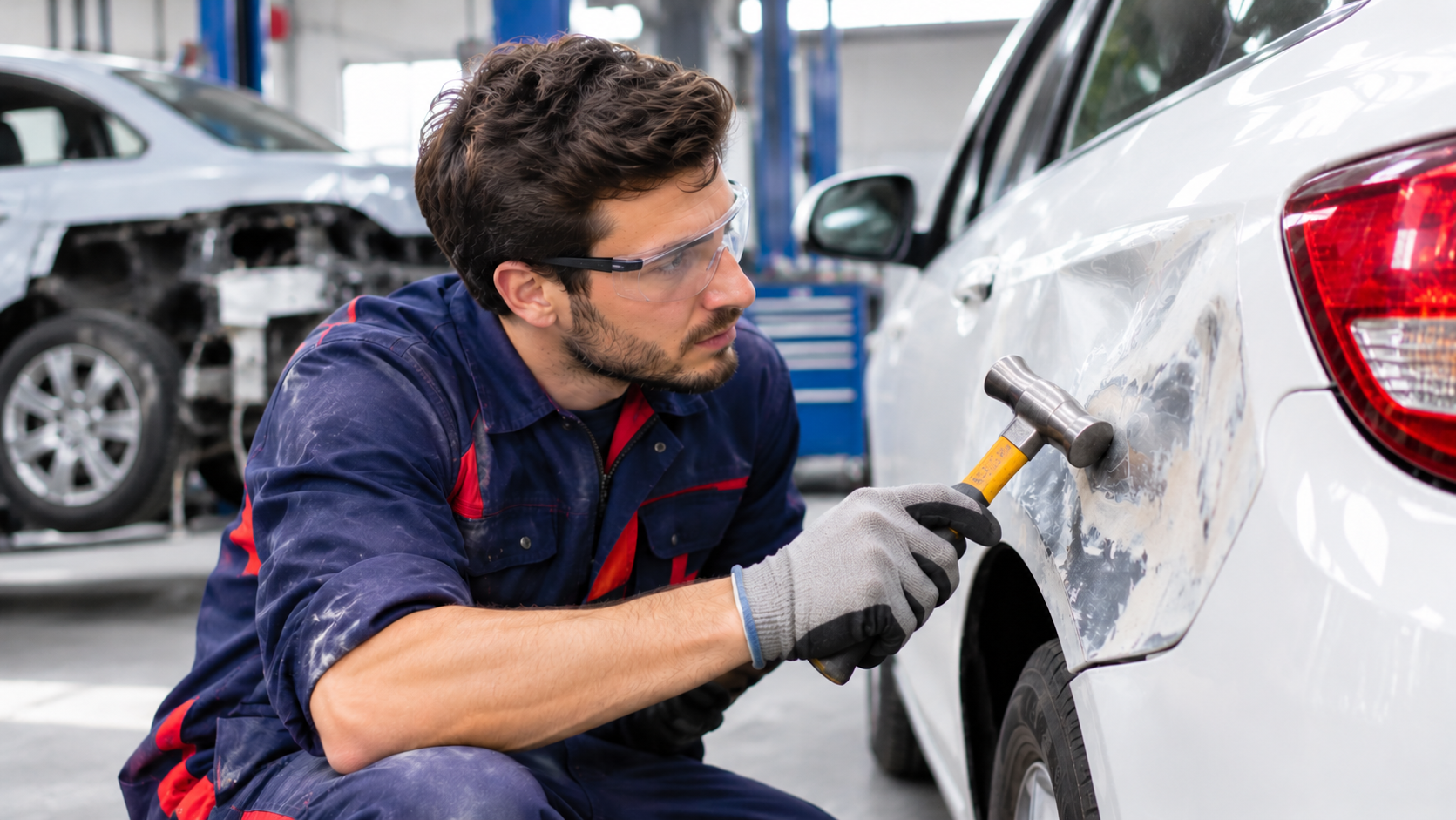
If your car has been damaged in an accident, you may come across two common terms when looking for professional vehicle repairs: smash repairs and panel beating.
Although these terms are often used interchangeably, they do not mean exactly the same thing. Both are closely related to restoring accident-damaged vehicles, but they describe different aspects of the automotive repair process.
Understanding the difference between smash repairs and panel beating can help you choose the right repair service for your vehicle.
Whether your car has a dented door, a damaged bumper or more extensive collision damage, knowing what each service involves can make it easier to understand the repair work required.
In this guide, we explain the difference between smash repairs and panel beating, the types of damage they address and what to consider when choosing a professional repairer in Australia.
What Are Smash Repairs?
Smash repairs refer to the broader process of repairing vehicles that have been damaged in accidents or collisions.
The term covers various services required to restore a vehicle’s bodywork, appearance and, where applicable, affected structural components.
Depending on the severity of the damage, smash repairs may involve several different repair techniques and automotive specialists.
Common smash repair services include:
- Repairing accident-damaged body panels.
- Replacing damaged doors, bumpers and guards.
- Repairing dents and scratches.
- Correcting vehicle body alignment.
- Automotive spray painting and refinishing.
- Replacing damaged external components.
- Coordinating additional mechanical or electrical repairs where required.
For example, if your vehicle has been involved in a front-end collision, the repair process may involve bumper replacement, bonnet repairs, panel beating, paint refinishing and checks of affected components.
Smash repairs generally cover the complete repair process rather than one specific repair technique.
What Is Panel Beating?
Panel beating is a specialised part of automotive body repair that focuses on repairing damaged vehicle panels and bodywork.
Panel beaters use specialised tools and techniques to reshape damaged metal panels, remove dents, straighten bodywork and restore panel alignment where appropriate.
The aim is to bring damaged components back to their correct shape and condition, following suitable repair procedures.
Common panel beating work includes:
- Removing dents and creases.
- Straightening damaged metal panels.
- Repairing damaged doors and guards.
- Reshaping bonnets and boot panels.
- Correcting panel alignment.
- Repairing certain types of collision damage.
- Removing and replacing panels that cannot be appropriately repaired.
For example, if another vehicle hits your car door and leaves a deep dent, a panel beater may be able to repair the damaged panel rather than replacing the entire door.
However, the appropriate repair method depends on the severity of the damage, the material involved and the vehicle manufacturer’s repair requirements.
For a more detailed explanation, read our guide: What Does a Panel Beater Do? Inside the Car Repair Process.
Smash Repairs vs Panel Beating: Key Differences
The main difference is the scope of work involved.
Smash repairs describe the overall vehicle accident repair service, while panel beating refers to a specific type of body repair performed as part of that process.
Here is a comparison:
| Comparison | Smash Repairs | Panel Beating |
| Meaning | Overall accident vehicle repair process | Specialised vehicle panel repair work |
| Main focus | Restoring accident-damaged vehicles | Repairing and reshaping damaged body panels |
| Scope | Covers multiple repair stages | Focuses primarily on bodywork |
| Dent removal | May include dent repairs | A core part of the work |
| Panel replacement | Can include replacement of damaged panels | May involve panel removal and replacement |
| Spray painting | May include refinishing services | Usually works alongside spray painting specialists |
| Structural damage | May involve specialised structural repairs | May involve suitable body straightening work |
| Additional repairs | May coordinate mechanical and electrical work | Generally focuses on vehicle body panels |
In simple terms, panel beating can be one part of a smash repair job.
A vehicle that has sustained collision damage may require panel beating, spray painting, component replacement and other repairs before it is ready to return to the road.
When Do You Need Smash Repairs?
You may need smash repairs when your vehicle has sustained damage that requires more than a minor cosmetic fix.
Some common situations include:
Accident and Collision Damage
If your vehicle has been involved in a road accident, it may require several repairs to restore its condition.
This could include damaged bumpers, doors, bonnets, guards, lights and other components.
Front or Rear-End Damage
A front or rear collision can affect multiple vehicle components.
Depending on the impact, repairs may involve bumper replacement, panel repairs, structural inspections and refinishing.
Multiple Damaged Panels
If several panels have been damaged in an accident, a broader smash repair process may be required.
The repairer will assess the vehicle and determine which components can be repaired and which need replacement.
Paintwork and Body Damage
Accidents can cause scratches, damaged paintwork and dents across different areas of a vehicle.
Smash repair services may include surface preparation and automotive spray painting to restore the affected areas.
When Do You Need Panel Beating?
Panel beating may be suitable when your vehicle has dents, creases or other damage affecting its body panels.
Common examples include:
Minor and Moderate Dents
Small impacts from car park incidents, reversing accidents or other minor collisions may leave dents that can sometimes be repaired without replacing the entire panel.
Damaged Doors and Guards
Side impacts can leave doors and guards dented or misshapen.
A panel beater can assess whether the damaged panels are suitable for repair.
Creased Body Panels
More pronounced impacts can create creases in metal bodywork.
Specialised repair techniques may be needed to reshape the affected areas.
Panel Alignment Problems
After an accident, doors, bonnets and other body panels may no longer fit correctly.
A panel beater can assess the affected areas and determine whether adjustments or more extensive repairs are necessary.
Not all panel damage can be repaired using panel beating. Severely damaged panels may need to be replaced to meet appropriate repair and safety requirements.
How Do Smash Repairs and Panel Beating Work Together?
Although smash repairs and panel beating describe different things, they often form part of the same vehicle repair process.
Consider a vehicle involved in a side-impact collision.
The repair process may involve the following stages:
Step 1: Vehicle Damage Assessment
The repairer inspects the vehicle to identify visible damage and determine whether additional inspection is required.
Step 2: Panel Beating
Damaged panels may be reshaped, straightened or repaired using appropriate techniques.
Step 3: Panel Replacement
If certain components cannot be repaired appropriately, replacement panels may be required.
Step 4: Surface Preparation
The repaired areas are prepared for refinishing, including sanding and priming where necessary.
Step 5: Automotive Spray Painting
The affected areas are refinished using suitable paint-matching and application techniques.
Step 6: Reassembly and Final Inspection
Removed components are refitted, and the completed repairs are checked before the vehicle is returned.
This demonstrates how panel beating contributes to the wider smash repair process.
Not every vehicle requires all these stages. The work depends on the location and severity ofthe damage.
Is Panel Beating Better Than Replacing a Damaged Panel?
Whether a damaged panel should be repaired or replaced depends on several factors.
Repairing an existing panel may be suitable when the damage is within acceptable repair limits and the original component can be restored appropriately. severe, the material is unsuitable for repair or the manufacturer’s repair procedures require replacement.
Some factors considered during the decision include:
- Severity and location of the damage.
- Type of vehicle panel material.
- Extent of stretching, tearing or deformation.
- Accessibility of the damaged area.
- Manufacturer repair requirements.
- Overall repair quality and safety considerations.
For example, a shallow dent in a door may be repairable, while a severely damaged door with compromised structural components may require replacement.
The decision should be based on a professional assessment rather than simply choosing the cheapest option.
How Much Do Smash Repairs and Panel Beating Cost?
The cost of smash repairs or panel beating depends on the type of damage, repair method and parts required.
There is no single price that applies to every vehicle repair.
Some factors that influence the overall cost include:
Extent of Damage
A small dent generally requires less work than a vehicle with multiple damaged panels or structural issues.
Type of Vehicle
The make, model and availability of replacement parts can affect repair costs.
Repair or Replacement Requirements
Repairing an existing panel and replacing it with a new component involve different labour and material costs.
Paintwork Requirements
Colour matching, surface preparation and refinishing can contribute to the total repair cost.
Additional Components
Damaged sensors, lights, fittings and other components may require additional work.
Before proceeding, request a written quotation outlining the recommended repairs, parts, labour and any additional costs.
If the damage resulted from an accident, check your insurance arrangements and any applicable repair approval requirements before authorising the work.
How to Choose the Right Smash Repairer or Panel Beater
Choosing the right repairer is important because the quality of the repair can affect your vehicle’s appearance, condition and safety.
When comparing repair businesses, consider:
- Experience with accident-related vehicle repairs.
- Panel beating and body repair capabilities.
- Automotive spray painting services.
- Suitable workshop equipment.
- Clear repair assessments and quotations.
- Communication during the repair process.
- Relevant workmanship warranties and repair terms.
Ask the repairer to explain whether the damaged components can be repaired or need replacement.
If you are making an insurance claim, confirm whether your policy allows you to choose your preferred repairer and whether approval is required before work begins.
A reliable repair business should be transparent about the work involved, expected timeframe and potential additional costs.
Why Professional Vehicle Repairs Matter
Accident damage should not be judged by appearance alone.
A vehicle may look relatively undamaged from the outside while having underlying issues that need attention.
Poorly performed body repairs can also result in uneven panel gaps, paint defects, incorrect component fitting and other problems.
Professional vehicle repairs help ensure that the appropriate repair methods are used for the damage involved.
This is particularly important when collision damage affects structural components, vehicle safety systems or manufacturer-specific repair requirements.
Having your vehicle assessed by experienced repair professionals can help identify the work needed before it returns to the road.
Conclusion
Smash repairs and panel beating are closely related, but they serve different purposes in the vehicle repair process.
Smash repairs cover the broader process of restoring accident-damaged vehicles, while panel beating focuses on repairing and reshaping damaged body panels.
Understanding the difference can help you know what type of work your vehicle may need following an accident.
At Vitra Autobodies, we understand the importance of professional accident repairs and quality vehicle bodywork. If your car has sustained collision damage, explore our automotive repair services and contact our team to discuss your repair requirements.