
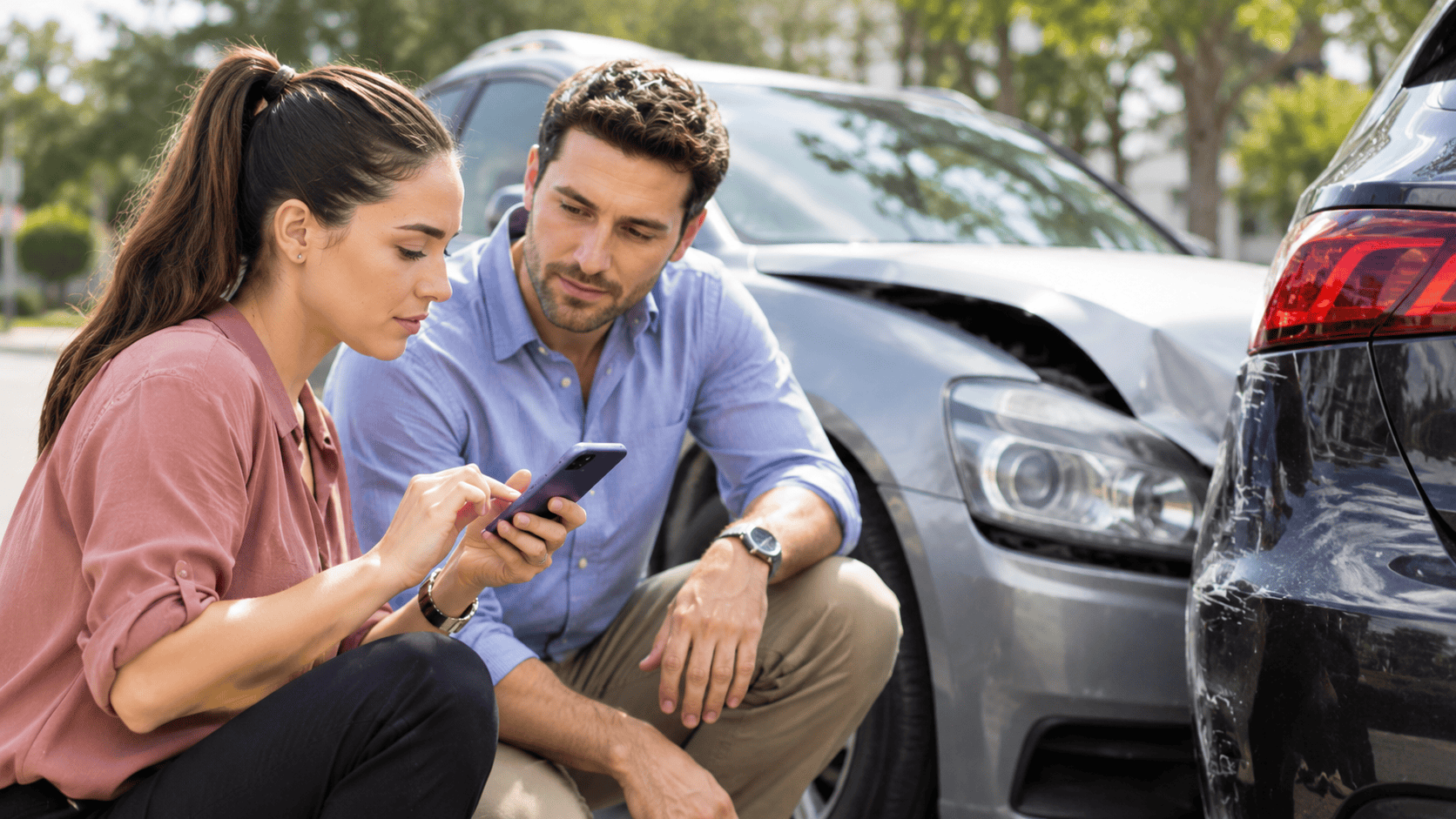
Being involved in a car accident is stressful, even when another driver is clearly responsible. You may be left dealing with vehicle damage, insurance paperwork, repair arrangements and questions about who will cover the costs.
If you are wondering what to do in a car accident when you are not at fault, understanding your rights and the correct steps can make the situation easier to manage.
In Australia, drivers who are not responsible for an accident may be able to recover reasonable repair costs and other eligible losses from the at-fault driver. However, the process depends on the available evidence, insurance coverage and circumstances of the collision.
Whether you have comprehensive insurance, third-party insurance or no vehicle damage insurance, knowing what to do next can help protect your interests.
This guide explains the steps to take after a not-at-fault car accident, how insurance claims work, who pays for repairs and how to get your vehicle back on the road.
1. Make Sure Everyone Is Safe
Your first priority after any car accident should be the safety of everyone involved.
Even if you believe the other driver caused the collision, do not immediately focus on vehicle damage or insurance claims.
Take the following steps:
- Stop your vehicle safely and switch on your hazard lights.
- Check yourself, your passengers and other people involved for injuries.
- Look for immediate hazards, including leaking fuel, smoke or damaged electrical components.
- Move away from moving traffic if it is safe to do so.
- Call Triple Zero (000) if someone is seriously injured, trapped or in immediate danger.
If anyone is injured, avoid moving them unless they are in immediate danger.
If your vehicle has sustained significant damage, do not assume it is safe to drive. Arrange towing assistance if necessary.
Your safety and the safety of other road users should always come before discussing responsibility or insurance arrangements.
2. Exchange Details with the Other Driver
Once everyone is safe, exchange the necessary information with the other driver.
Even if the other person admits responsibility, make sure you collect their details.
You should obtain:
- Full name and contact number.
- Residential address.
- Driver’s licence details, where appropriate.
- Vehicle registration number.
- Vehicle make and model.
- Vehicle owner’s details, if different from the driver.
- Insurance company details, if available.
You should also provide the relevant information about yourself and your vehicle.
Keep the conversation calm and factual. Avoid arguments about who caused the accident or making statements accepting liability.
Remember that determining responsibility can involve more than simply looking at the visible damage. The circumstances and available evidence will be important when an insurer or other party assesses the incident.
3. Collect Evidence to Support Your Position
Evidence is one of the most important things to collect after a not-at-fault car accident.
Even when the other driver appears responsible, having clear evidence can help prevent disagreements during the insurance claim process.
If it is safe, photograph:
- Damage to your vehicle.
- Damage to the other vehicle.
- Both vehicle registration plates.
- The overall accident scene.
- Road signs and traffic signals.
- Vehicle positions after the collision.
- Relevant road conditions and debris.
You should also:
- Record the accident date, time and location.
- Collect contact details from independent witnesses.
- Save relevant dashcam footage.
- Keep any available police incident or reference number.
- Write down your recollection of how the accident happened.
If the accident occurred near a business or shopping centre, you may also want to ask whether CCTV footage is available.
Keep copies of all evidence in one place so you can provide it to your insurer, the other driver’s insurer or a legal adviser if required.
4. Report the Accident to the Police When Required
Not every minor vehicle collision requires police attendance. However, certain circumstances require police involvement or reporting under Australian state and territory rules.
You should contact the police when:
- Someone has been injured or killed.
- A driver involved in the accident fails to stop or exchange details.
- There is suspected involvement of alcohol or drugs.
- There is a serious traffic hazard.
- The accident meets your state’s or territory’s reporting requirements.
If police attend the scene, ask for the relevant incident or reference number.
Keep in mind that a police report or infringement notice does not necessarily determine civil liability for vehicle damage. The responsibility for paying repair costs may need to be assessed separately.
For example, Legal Aid NSW explains that civil responsibility for accident damage is different from whether a driver receives a traffic offence notice. https://www.legalaid.nsw.gov.au/my-problem-is-about/my-car-or-a-driving-offence/car-accidents/who-is-responsible
5. Contact Your Car Insurance Provider
Even if you believe you were not responsible for the accident, contact your insurance provider and explain what happened.
Some insurance policies require you to notify your insurer about an accident even if you do not intend to make a claim.
Your next steps will depend on the type of insurance you have.
If You Have Comprehensive Car Insurance
Comprehensive insurance generally covers accidental damage to your own vehicle, subject to your policy’s terms, conditions and exclusions.
You may be able to lodge a claim through your own insurer and allow them to manage the repair and recovery process.
Your insurer may:
- Arrange a vehicle damage assessment.
- Organise repairs through an approved repairer.
- Contact the other driver’s insurer.
- Investigate who was responsible.
- Seek to recover the repair costs from the responsible party.
Ask whether you need to pay an excess when lodging the claim.
Some policies allow the excess to be waived when you can provide sufficient details of the at-fault driver. However, the conditions vary between insurers and policies.
Do not assume you will automatically avoid an excess simply because you were not at fault.
If You Have Third-Party Property Damage Insurance
Third-party property damage insurance generally covers damage you cause to other people’s vehicles or property.
It does not normally cover accidental damage to your own vehicle.
If another driver caused the accident, you may need to pursue the repair costs directly from that driver or their insurer.
Check your policy and contact your insurer to understand any notification requirements.
If You Have No Comprehensive Insurance
Not having comprehensive insurance does not automatically prevent you from recovering repair costs from a driver who was responsible for the accident.
You may be able to pursue a claim directly against the at-fault driver or their insurer.
However, you will generally need to establish responsibility and provide evidence supporting the amount you are claiming.
For more information, read our related guide: I Have No Car Insurance and Someone Hit Me – What Happens Next?
6. Understand Who Pays for Your Vehicle Repairs
One of the biggest concerns after a not-at-fault accident is determining who will pay for the damage.
The answer depends on the insurance coverage available and whether the other driver accepts responsibility.
Here are some common situations.
Situation 1: The Other Driver Has Comprehensive Insurance
If the other driver is responsible and their insurer accepts liability, you may be able to recover the reasonable cost of repairing your vehicle through their insurer.
Situation 2: The Other Driver Has Third-Party Property Damage Insurance
The other driver’s policy may cover their legal liability for damage caused to your vehicle, subject to the policy terms and the insurer’s assessment.
Situation 3: The Other Driver Has No Insurance
You may still be able to pursue the responsible driver directly for the reasonable cost of repairs and other recoverable losses.
However, recovering payment may be more difficult if the driver refuses to pay or has limited financial resources.
Situation 4: Both Drivers Disagree About Responsibility
The insurers or relevant parties may investigate the circumstances and consider the available evidence.
If responsibility cannot be agreed upon, negotiation, mediation or legal proceedings may be necessary.
It is important to understand that an insurance claim is not automatically approved simply because you believe you were not at fault.
7. Get Your Vehicle Professionally Assessed
Once you have notified the relevant parties, arrange a professional assessment of your vehicle’s damage.
Even if the collision appears minor, some damage may not be immediately visible.
For example, an impact to the front or rear bumper may also affect internal supports, mounting points or other vehicle components.
A professional smash repairer can inspect the damaged areas and help identify the required work.
The assessment may involve checking:
- Front and rear bumpers.
- Doors and side panels.
- Bonnet and boot alignment.
- Vehicle body alignment.
- Damaged guards and panels.
- Headlights and external fittings.
- Scratches, dents and paintwork damage.
- Potential structural damage.
Ask for a written repair quotation explaining the recommended work.
If you are making a claim through the other driver’s insurer, check whether an assessment or repair approval is required before authorising any work.
8. Choose a Suitable Smash Repairer
Choosing the right repairer is an important part of getting your vehicle back into its pre-accident condition.
If you have comprehensive insurance, your insurer may have a preferred repairer network. However, depending on your policy and circumstances, you may also have options to choose your own repairer.
Before making a decision, check your policy and discuss your preferences with your insurer.
When comparing repairers, consider:
- Experience with accident-related vehicle damage.
- Smash repair and panel beating capabilities.
- Automotive spray painting services.
- Quality of repair assessments and quotations.
- Communication throughout the repair process.
- Relevant workmanship warranties and repair terms.
- Ability to explain the work required.
If the other driver’s insurer is handling your claim, ask whether you can arrange repairs through your preferred repairer and what approval process applies.
A clear understanding of the repair arrangements can help prevent unnecessary delays and unexpected expenses.
9. What If the At-Fault Driver or Their Insurer Refuses to Pay?
Sometimes, the other driver or their insurance company may dispute responsibility or refuse to cover the full repair costs.
This does not necessarily mean you have no further options.
Consider the following steps.
Request an Explanation
Ask the insurer or other driver to explain why liability or payment has been disputed.
Request the reasons in writing so you can understand what information is missing or being contested.
Provide Additional Evidence
Submit any additional photographs, witness statements, dashcam footage or other relevant documents that support your position.
Obtain Independent Repair Quotations
If the repair cost is disputed, obtain another written quotation from a professional repairer.
Make sure the quotation clearly explains the work required and associated costs.
Send a Letter of Demand
If the responsible driver refuses to pay, you may consider sending a formal letter of demand requesting payment for the reasonable repair costs and other recoverable losses.
Include supporting evidence and give a reasonable response timeframe.
Consider Dispute Resolution or Legal Advice
If the disagreement continues, consider mediation or obtain legal advice about your options.
If your own insurer is handling the claim and you disagree with its decision, you can use its internal dispute resolution process. If the dispute remains unresolved, you may be able to approach the Australian Financial Complaints Authority (AFCA), depending on the issue and your eligibility.
Legal Aid NSW provides further guidance on making claims and resolving disputes following car accidents. https://www.legalaid.nsw.gov.au/my-problem-is-about/my-car-or-a-driving-offence/car-accidents/making-a-claim
10. Understand Whether You Can Claim Other Accident-Related Expenses
Vehicle repair costs are not necessarily the only expenses that arise after an accident.
Depending on the circumstances, you may be able to seek compensation for other reasonable losses caused by the collision.
These may include:
- Towing charges.
- Reasonable vehicle storage costs.
- Temporary replacement vehicle expenses.
- Certain transport expenses.
- Other reasonable and supported financial losses.
However, not every expense is automatically recoverable.
You may need to demonstrate that the expense was reasonably necessary, directly related to the accident and supported by appropriate documentation.
If you require a replacement vehicle while your car is being repaired, discuss the options and potential costs with your insurer or legal adviser before making arrangements.
11. Understand the Vehicle Repair Process
Once the repair arrangements and payment responsibilities have been confirmed, the repair work can begin.
Depending on the extent of the damage, the process may involve several stages.
Damage Assessment
The repairer examines the vehicle and identifies the affected areas and required work.
Panel Beating
Damaged body panels are repaired or replaced where necessary to restore the vehicle’s shape and alignment.
Surface Preparation
Affected surfaces are prepared to create a suitable foundation for refinishing.
Automotive Spray Painting
Where required, paint is matched and applied to restore the vehicle’s appearance.
Reassembly and Quality Inspection
Repaired components are refitted, and the completed work is inspected before the vehicle is returned.
Repair times can vary depending on the severity of the damage, parts availability and the complexity of the work.
Stay in contact with your repairer and ask for updates if the estimated completion date changes.
12. Check Your Vehicle Before Accepting It Back
Before collecting your repaired vehicle, take time to inspect the completed work.
A proper inspection can help you identify any concerns before leaving the repair facility.
Consider checking:
- Repaired panels and bodywork.
- Paint colour and finish.
- Panel gaps and alignment.
- Doors, bonnet and boot operation.
- Headlights and other external fittings.
- Warning lights on the dashboard.
- Any unusual noises or changes in vehicle operation.
- Completion of all agreed repair work.
Ask the repairer to explain any work that has been completed and provide relevant documentation.
If you notice a concern, raise it with the repairer before accepting the vehicle as fully completed.
Keep copies of repair invoices, assessment reports and any applicable workmanship documentation.
Conclusion
Being involved in a car accident when you are not at fault can still create significant inconvenience, but understanding the correct steps can make the recovery process easier.
Prioritise safety, exchange information, collect evidence and notify your insurer. Then establish how the repair costs will be handled and arrange a professional vehicle damage assessment.
Whether you are claiming through your own insurer or pursuing the responsible driver, keeping accurate records and understanding the repair process can help you make informed decisions.
At Vitra Autobodies, we understand that accident-related vehicle damage can be stressful. If your vehicle needs attention following a collision, explore our automotive repair services and contact our team to discuss your vehicle repair requirements.